Gateway to the Kingdom: The Enchanting Paro Valley
Nestled amidst towering peaks and whispering pine forests, Paro Valley serves as the breathtaking first impression of Bhutan. As the home of the country’s sole international airport, this vibrant region effortlessly bridges ancient traditions with modern arrivals. The valley floor is carved gracefully by the pristine waters of the Pa Chhu (Paro River), creating a landscape that feels like a living painting.
A Sacred Cradle of History and Legend
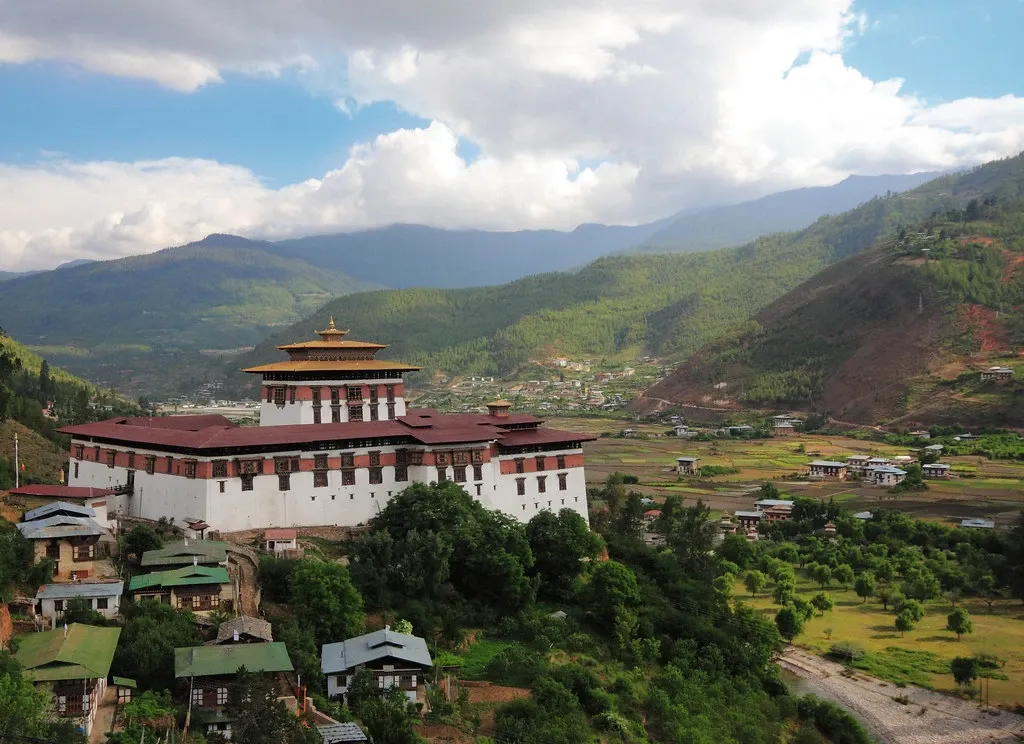
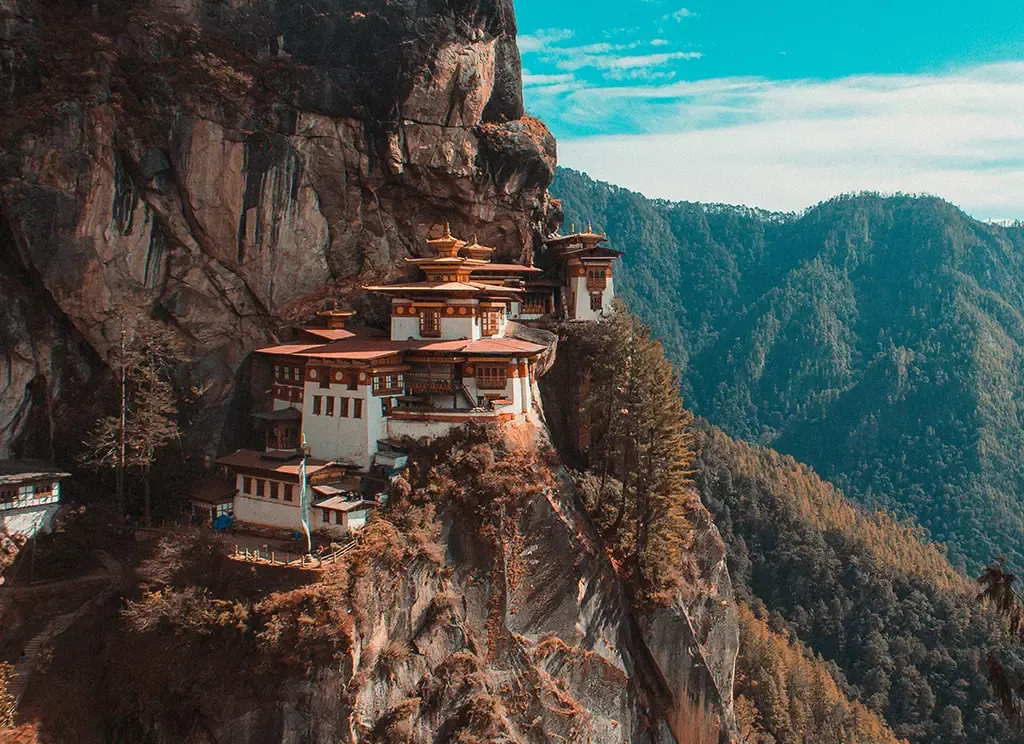
Paro is a living museum, holding the spiritual keys to Bhutan’s past. The valley is dotted with centuries-old dzongs, cliffside meditation caves, and sacred shrines that echo with tales of Padmasambhava (Guru Rinpoche). From the imposing walls of Rinpung Dzong to the deep historical treasures preserved inside the National Museum (Ta Dzong), every corner of Paro narrates a story of resilience, faith, and timeless Himalayan heritage.
Terraced Fields and the Iconic Red Rice
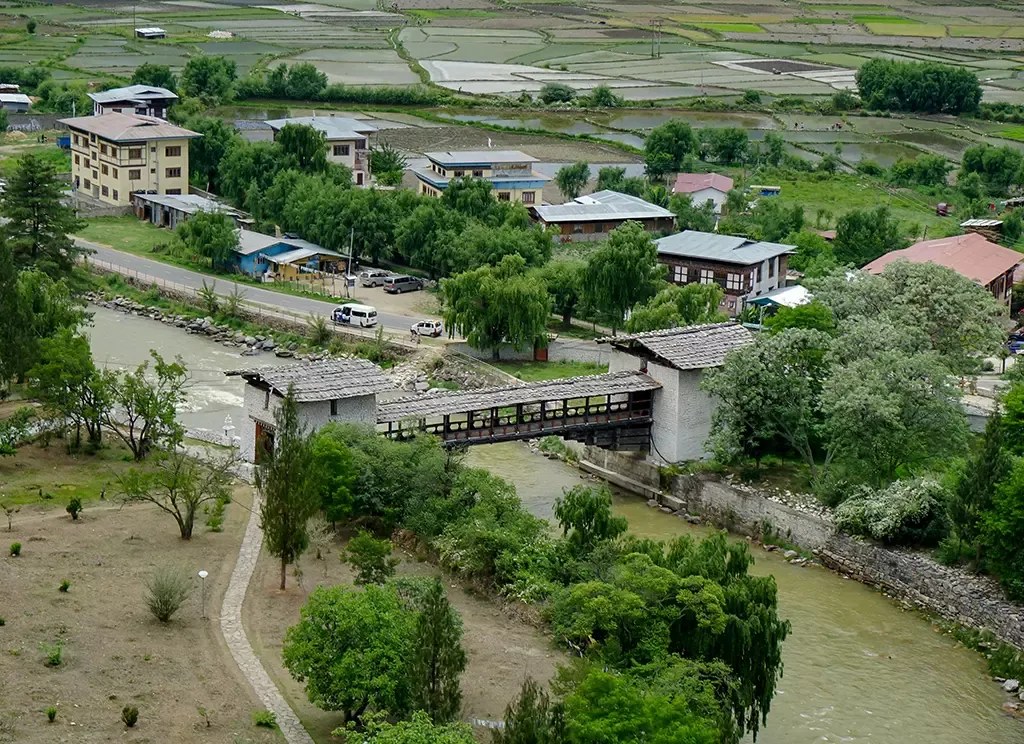
Beyond its spiritual weight, Paro is celebrated as one of the most fertile and agricultural hearts of the Kingdom. The valley slopes are beautifully sculpted into cascading emerald terraces. It is here that local farmers cultivate Bhutan’s famous nutritious red rice, sustained by the mineral-rich glacial waters flowing down from the high peaks.
Guarded by the Mighty Chomolhari
Looking north, the valley is eternally watched over by the majestic, snow-shrouded peak of Mount Chomolhari. Standing at a towering 7,314 meters, this sacred mountain reigns in white glory, providing a dramatic backdrop to everyday life in the valley and serving as an irresistible beacon for trekkers and nature lovers alike.