Punakha: The Warm and Majestic Ancient Capital
Dropping into a lush, subtropical valley, Punakha offers a warm and breathtaking change of scenery from the higher altitude regions. Serving as the winter capital of Bhutan for centuries, this fertile valley remains the winter seat of the Chief Abbot and the central monastic body. Blessed with a gentle climate, the entire region feels alive with dense vegetation, winding rivers, and a sense of royal history that deeply connects visitors to Bhutan’s golden past.
Punakha Dzong: The Palace of Great Happiness
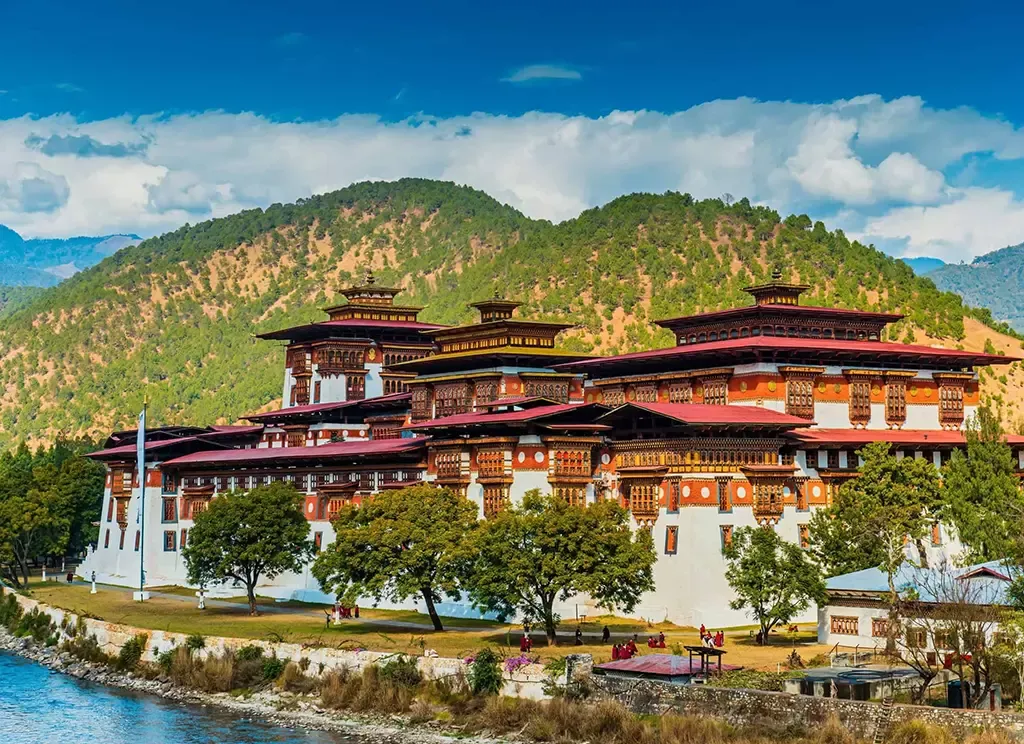
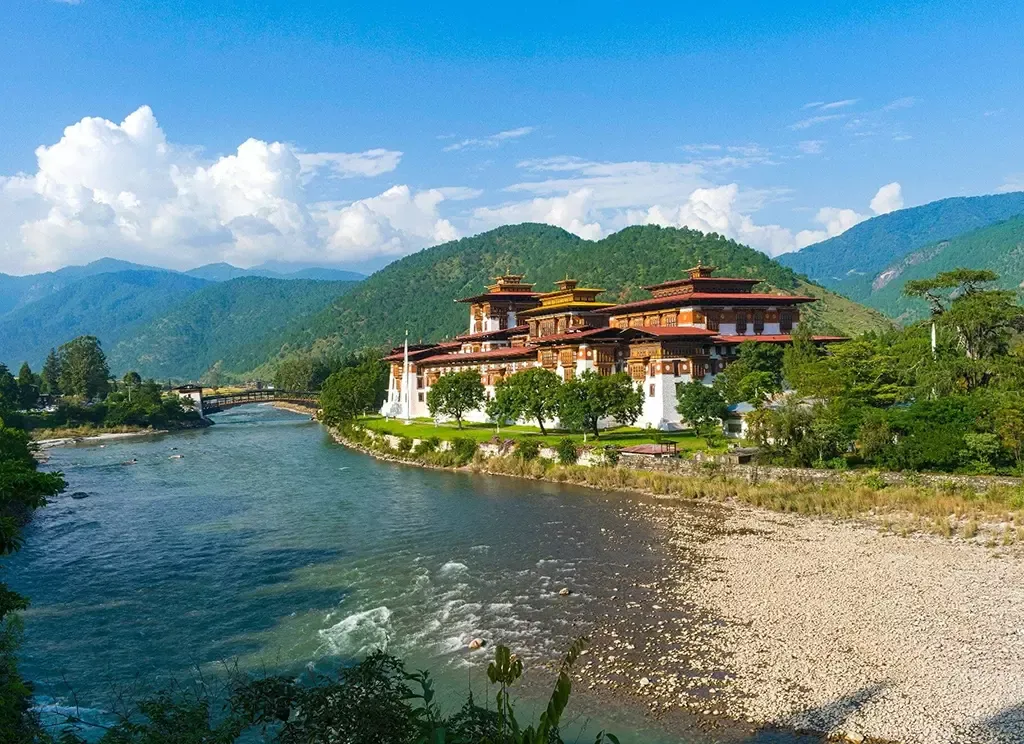
Widely regarded as the most beautiful fortress in the entire country, Punakha Dzong sits majestically at the exact confluence of two major rivers. This architectural masterpiece stands as a brilliant testament to Bhutanese craftsmanship, especially in spring when the surrounding jacaranda trees bloom with vibrant lilac flowers against the fortress’s whitewashed walls. Inside, complex woodwork, massive courtyards, and sacred murals hold the deepest historical secrets of the Kingdom’s unification.
The Confluence of the Pho Chhu and Mo Chhu Rivers
The lifeblood of the valley is its two iconic rivers: the Pho Chhu (Father River) and Mo Chhu (Mother River). Their sweeping waters curve gracefully around the dzong before merging into the Puna Tsang Chhu. The river valley is a hub for gentle adventure, where travelers can experience scenic rafting or simply sit along the banks to enjoy the crisp breeze coming off the glacial waters.
Golden Rice Fields and the Legendary Suspension Bridge
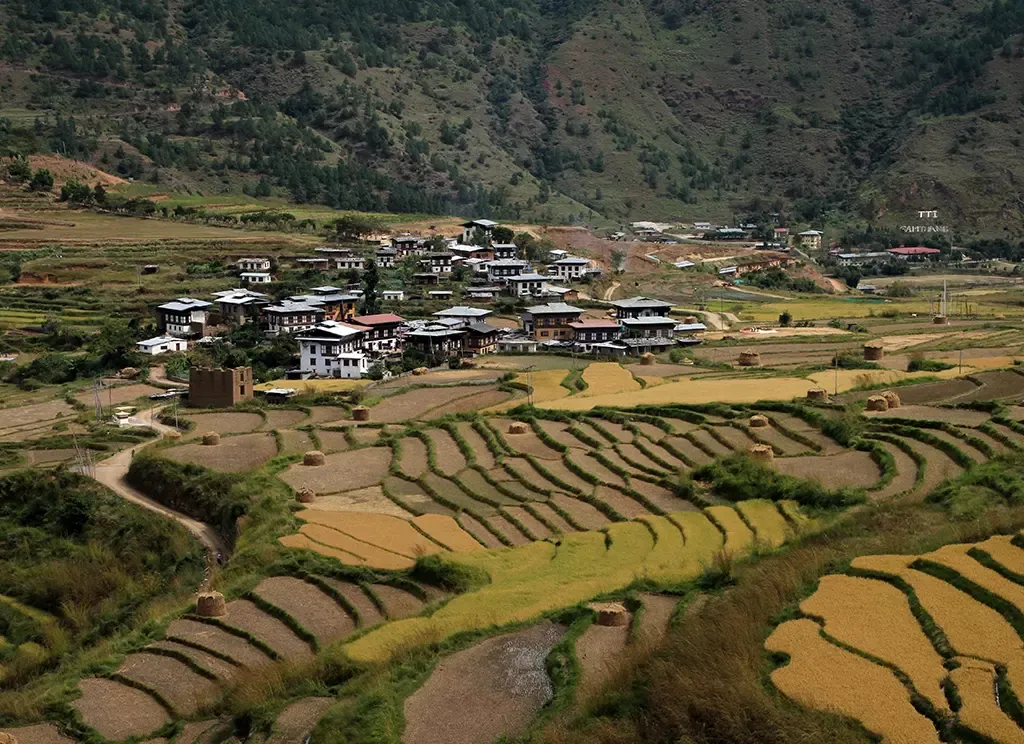
Spanning across the rushing waters of the Pho Chhu is the famous Punakha Suspension Bridge, one of the longest and oldest of its kind in Bhutan. Draped in colorful, fluttering prayer flags, walking across this swinging bridge connects you directly to local villages and vast, cascading terraced rice fields. These emerald-green and golden fields sculpt the valley slopes, showcasing a peaceful agricultural lifestyle that has remained unchanged for generations.